
Every agent already owns a camera. Almost none of them own a way to show a buyer what it actually feels like to live somewhere. That gap is not really about technology, and it is not a small one. It comes down to what buyers say they are actually choosing when they choose a home, and the research on that is more specific than most agents realize.
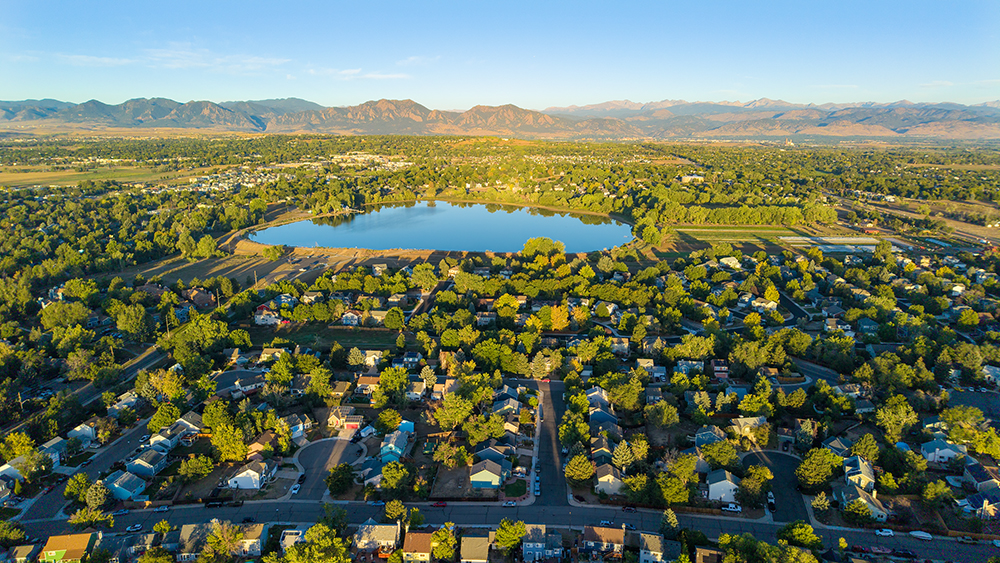
Centaur Village North, Lafayette, shot in both vertical and horizontal. Flown this month and now live in the library.
In the National Association of Realtors' 2025 Profile of Home Buyers and Sellers, buyers were asked what actually mattered most in their decision. Fifty nine percent named the quality of the neighborhood as the number one factor, ahead of affordability, ahead of the commute, and four times ahead of the school district. Almost nobody markets the neighborhood, and that gap is the whole opportunity.
A ground-level listing photo can show a kitchen and a backyard. It cannot show the walk to the coffee shop, the trail that runs behind the subdivision, or the way the whole community sits against the mountains. A buyer is not only picturing a house. They are picturing a life, and most of that life happens outside the four walls a normal listing photo can reach.
Aerial footage solves a problem that neither a ground photographer nor an AI image generator can solve on their own. A drone can show the property and its context in the same frame: the house, the street, the park, the ridgeline, all at once, in a single continuous shot instead of a dozen separate pictures a buyer has to mentally stitch together.
And it is real. So much of real estate marketing right now is flooded with AI-generated images, and buyers can feel when a place is not real. What a drone captures is actual light, on an actual morning, over streets people actually live on. That authenticity is becoming rare, and I think it is becoming one of the most valuable things an agent can offer a buyer who is choosing a community as much as a house.
Zillow research ranks video walkthroughs among the most useful content a listing can include, and buyers consistently say so themselves. Yet the National Association of Realtors has found that only about one in four agents use video consistently in their marketing. That is not a crowded market. That is most of the field standing still.
Photos still do the first job. Around eight in ten buyers tell NAR that listing photos are very important to whether they book a showing at all, and that decision happens before a buyer ever picks up the phone. Video is what carries a buyer past that first decision and into actually feeling the place, and aerial video does it faster than almost anything else, because it opens with the whole picture instead of building up to it room by room.
Industry benchmarks put a Reel's reach at roughly twice that of a single photo post, and close to a third of all time spent on Instagram now goes to watching Reels. That is measurable, and it is a big enough gap to change how you spend your time, not just what you post.
This is also where format matters. A listing video shot only in horizontal cannot become a Reel without cropping the shot you worked hard to get, and a vertical-only clip looks wrong on a website or in a listing video. Every neighborhood I fly gets both orientations for exactly this reason, so the same flight gives you the vertical cut for Reels and Stories and the horizontal cut for your listing video, your website, and YouTube, with nothing cropped or reshot for either one.
The agents who get the most out of aerial footage are not treating it as a one-time splurge on a single listing. They are using a neighborhood flight as a small library they can pull from for months: a Reel the week it is shot, a Story a few weeks later, the opening of a listing video whenever a new property comes up in that community, and a still image for an email header or a listing presentation.
One flight, used well, can carry an agent's Community pillar, one of the four pillars I teach agents to rotate through, for weeks at a time, with no new shoot required. That is the practical case for aerial footage. It is not one dramatic shot. It is a small, reusable library that keeps working long after the drone lands.
Both. A neighborhood flight becomes the opening shot of a listing video the moment you have a property there, and it also works as standalone Community-pillar content between listings, which is what keeps an agent visible in the slow stretches.
No. Most agents license footage from a local aerial library instead of learning to fly and getting FAA certified themselves. That is the whole idea behind Foothills Film + Footage: the footage is already shot, already color-graded, and ready in both vertical and horizontal for whatever platform you are posting to.
Because a vertical clip and a horizontal clip serve different jobs. Vertical is built for Reels and Stories, where most of today's reach lives. Horizontal is built for a listing video, your website, and YouTube. A clip shot in only one orientation forces a crop or a reshoot, and either one costs you time or quality.
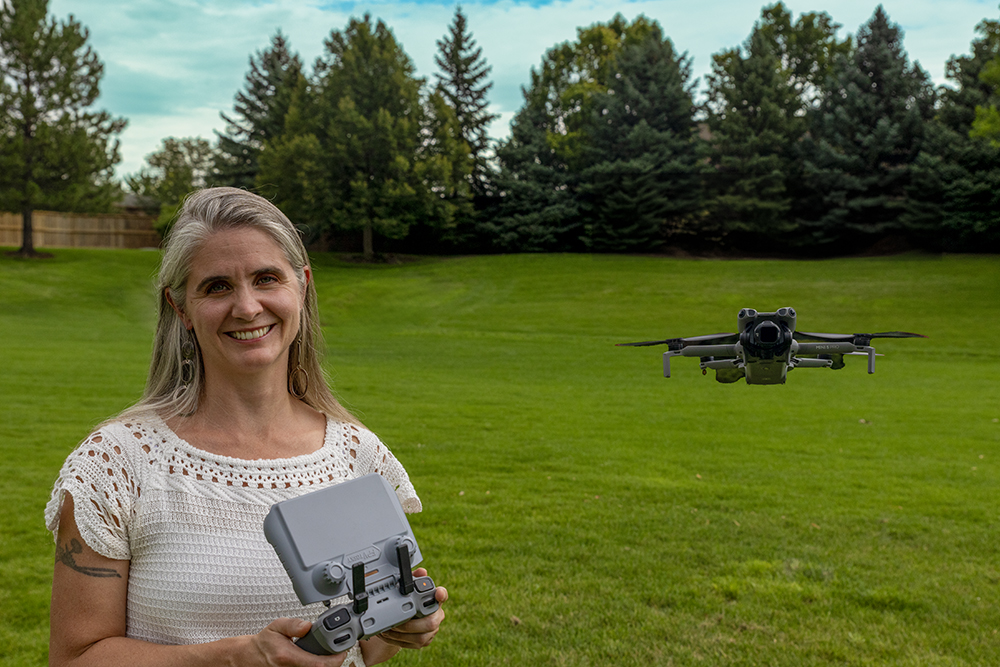
Kyra Coates is an FAA-certified drone pilot and long-time marketing and communications director in Longmont, and the founder of Foothills Film + Footage, an aerial footage library of Boulder County neighborhoods built to help agents market the places they sell.